


How does a universal socket achieve compatibility with multiple plug standards?
Release Time : 2025-12-31
In today's increasingly globalized world, different countries and regions use significantly different power plug and socket standards—more than a dozen mainstream types. This diversity causes great inconvenience for international travelers, multinational corporations, and electronics manufacturers. The universal socket was developed to address this need. Through ingenious structural design, the application of smart materials, and the integration of safety mechanisms, it achieves physical compatibility and electrical adaptation for multiple plug standards within a single interface, becoming an important bridge for the interconnection of modern electrical equipment.
1. Flexible Contact Plates and Multi-Position Composite Structure
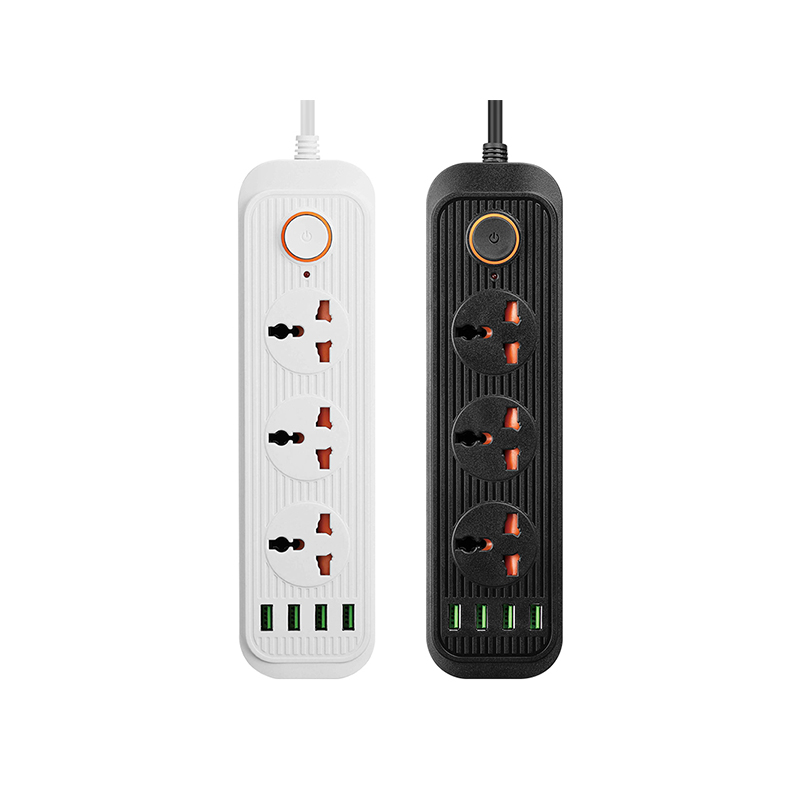
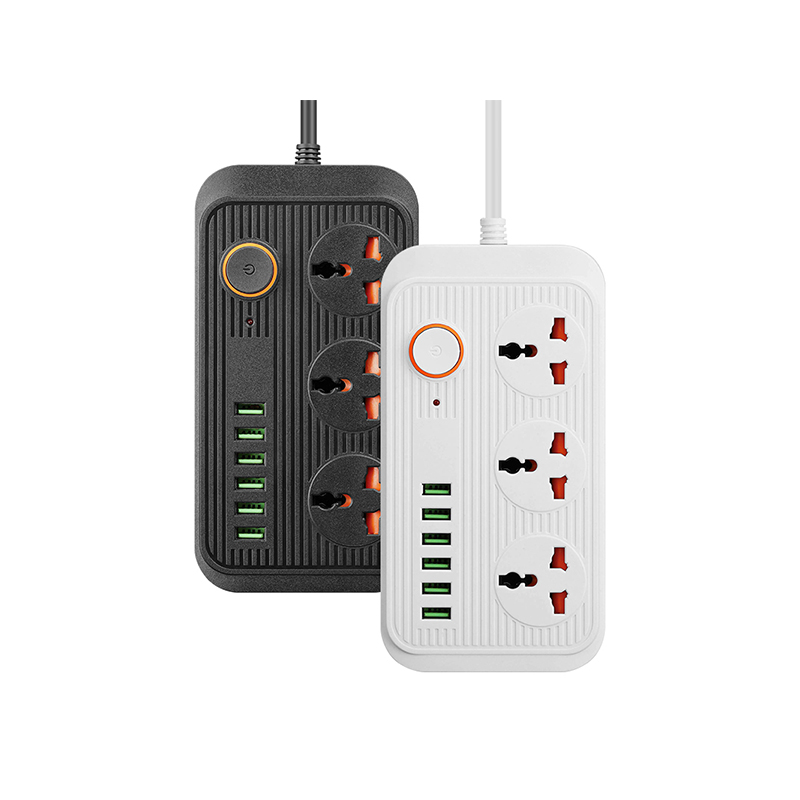
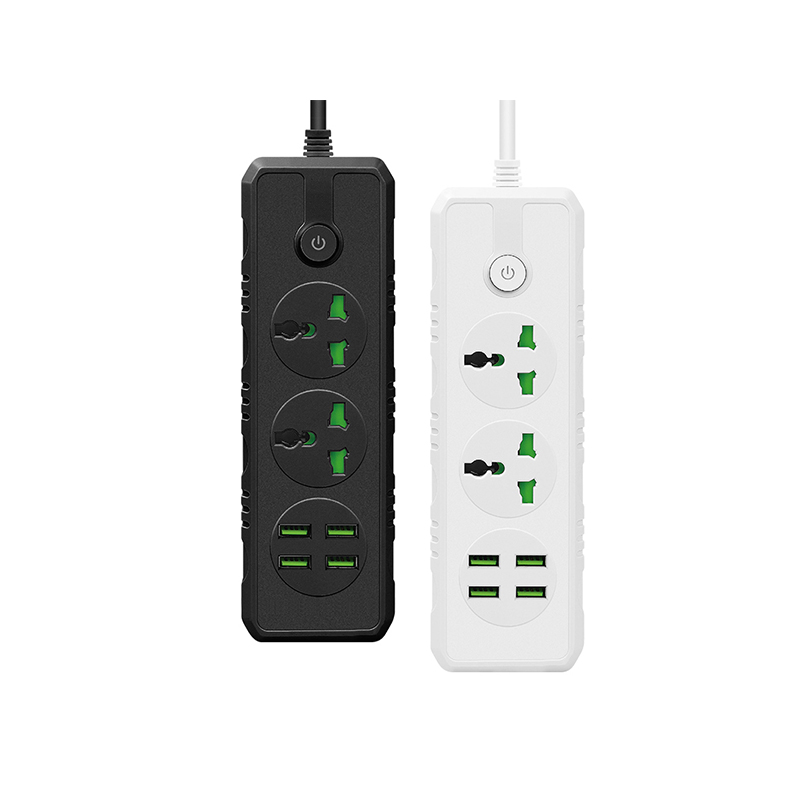
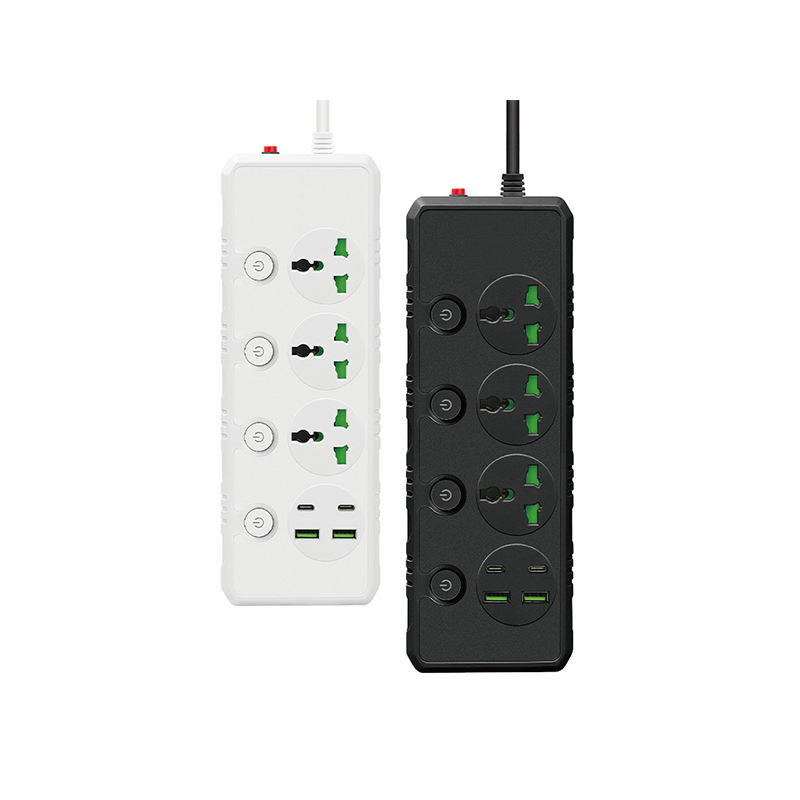
The core of the universal socket lies in the design of its internal conductive system. Traditional sockets only correspond to one type of pin, while the universal socket adopts a "multi-port shared + flexible metal spring" solution. Its panel has multiple overlapping or staggered holes, each corresponding to the live, neutral, or even ground pin positions of different standard plugs. For example, one hole may simultaneously accommodate American standard flat pins, European standard round pins, and British standard square pins. Internally, it features U-shaped or V-shaped contact springs made of highly elastic phosphor bronze or beryllium copper. These springs possess a wide range of deformation capabilities: when any standard plug is inserted, the springs automatically conform to the plug surface, forming a low-resistance, high-reliability electrical connection. This "one-hole-multiple-use, self-adaptive clamping" mechanism is the foundation for achieving physical compatibility.
2. Intelligent Conductivity Logic and Misconnection Protection
Compatibility does not equal disorder. To prevent short circuits or electric shocks caused by incorrect insertion, high-end universal sockets incorporate a "logic-based conduction" design. For example, the internal circuitry is only activated when the plug is fully inserted and triggers a specific mechanical linkage mechanism; some models also use independent sliders to isolate different socket positions, ensuring that the socket is shielded when not in use. Furthermore, the grounding terminal is usually independently located and only activated when a plug conforming to safety regulations is inserted, preventing the risk of accidental contact between the two prongs and the grounding terminal. This "on-demand conduction, zoned isolation" strategy enhances compatibility while strengthening safety.
3. Modular and Configurable Design Enhances Flexibility
The Universal Socket employs a modular architecture, allowing users to replace internal contact modules or adjust the pin layout according to their needs. For example, in hotel or airport VIP lounges, administrators can pre-set plug combinations for commonly used countries, balancing efficiency and safety. Innovative products integrate USB/Type-C fast charging modules, combining AC power supply and DC fast charging to meet the diverse charging needs of mobile phones, tablets, and other electronic devices. This "hardware reconfigurable + functionally expandable" concept transforms the Universal Socket from passive adaptation to proactive service.
4. Materials and Processes Ensure Long-Term Reliability
Frequent plugging and unplugging of different sizes and materials places extremely high demands on the durability of the socket. The Universal Socket's outer shell is heat-resistant and impact-resistant; internal conductive components are nickel-plated or silver-plated to improve conductivity and resist oxidation. The spring contacts have undergone millions of plug-and-unplug life tests to ensure stable clamping force during long-term use. Simultaneously, the overall structure is assembled using precision injection molding and ultrasonic welding processes, eliminating the risk of loosening and arcing.
The compatibility of the universal socket is not simply about "adding more ports," but rather a systematic innovation that integrates mechanical engineering, electrical safety, materials science, and human-computer interaction. It uses a flexible structure to address physical differences, intelligent logic to mitigate electrical risks, and modular thinking to expand application scenarios. In a world of "one world, multiple plugs," the universal socket is quietly becoming an invisible link connecting the global power ecosystem, making cross-regional electricity use truly "plug and play."
1. Flexible Contact Plates and Multi-Position Composite Structure
The core of the universal socket lies in the design of its internal conductive system. Traditional sockets only correspond to one type of pin, while the universal socket adopts a "multi-port shared + flexible metal spring" solution. Its panel has multiple overlapping or staggered holes, each corresponding to the live, neutral, or even ground pin positions of different standard plugs. For example, one hole may simultaneously accommodate American standard flat pins, European standard round pins, and British standard square pins. Internally, it features U-shaped or V-shaped contact springs made of highly elastic phosphor bronze or beryllium copper. These springs possess a wide range of deformation capabilities: when any standard plug is inserted, the springs automatically conform to the plug surface, forming a low-resistance, high-reliability electrical connection. This "one-hole-multiple-use, self-adaptive clamping" mechanism is the foundation for achieving physical compatibility.
2. Intelligent Conductivity Logic and Misconnection Protection
Compatibility does not equal disorder. To prevent short circuits or electric shocks caused by incorrect insertion, high-end universal sockets incorporate a "logic-based conduction" design. For example, the internal circuitry is only activated when the plug is fully inserted and triggers a specific mechanical linkage mechanism; some models also use independent sliders to isolate different socket positions, ensuring that the socket is shielded when not in use. Furthermore, the grounding terminal is usually independently located and only activated when a plug conforming to safety regulations is inserted, preventing the risk of accidental contact between the two prongs and the grounding terminal. This "on-demand conduction, zoned isolation" strategy enhances compatibility while strengthening safety.
3. Modular and Configurable Design Enhances Flexibility
The Universal Socket employs a modular architecture, allowing users to replace internal contact modules or adjust the pin layout according to their needs. For example, in hotel or airport VIP lounges, administrators can pre-set plug combinations for commonly used countries, balancing efficiency and safety. Innovative products integrate USB/Type-C fast charging modules, combining AC power supply and DC fast charging to meet the diverse charging needs of mobile phones, tablets, and other electronic devices. This "hardware reconfigurable + functionally expandable" concept transforms the Universal Socket from passive adaptation to proactive service.
4. Materials and Processes Ensure Long-Term Reliability
Frequent plugging and unplugging of different sizes and materials places extremely high demands on the durability of the socket. The Universal Socket's outer shell is heat-resistant and impact-resistant; internal conductive components are nickel-plated or silver-plated to improve conductivity and resist oxidation. The spring contacts have undergone millions of plug-and-unplug life tests to ensure stable clamping force during long-term use. Simultaneously, the overall structure is assembled using precision injection molding and ultrasonic welding processes, eliminating the risk of loosening and arcing.
The compatibility of the universal socket is not simply about "adding more ports," but rather a systematic innovation that integrates mechanical engineering, electrical safety, materials science, and human-computer interaction. It uses a flexible structure to address physical differences, intelligent logic to mitigate electrical risks, and modular thinking to expand application scenarios. In a world of "one world, multiple plugs," the universal socket is quietly becoming an invisible link connecting the global power ecosystem, making cross-regional electricity use truly "plug and play."