


How does the Power Strip's anti-electric shock design prevent the risk of accidental contact by children?
Release Time : 2025-12-23
Power Strip's anti-electric shock design utilizes optimized physical structure, intelligent protection mechanisms, and auxiliary safety measures to create a multi-layered protection system, effectively reducing the risk of accidental contact by children. Its core design philosophy revolves around "physical barrier" and "behavioral guidance," blocking the path to electric shock at its source while cultivating children's awareness of safe electricity use.
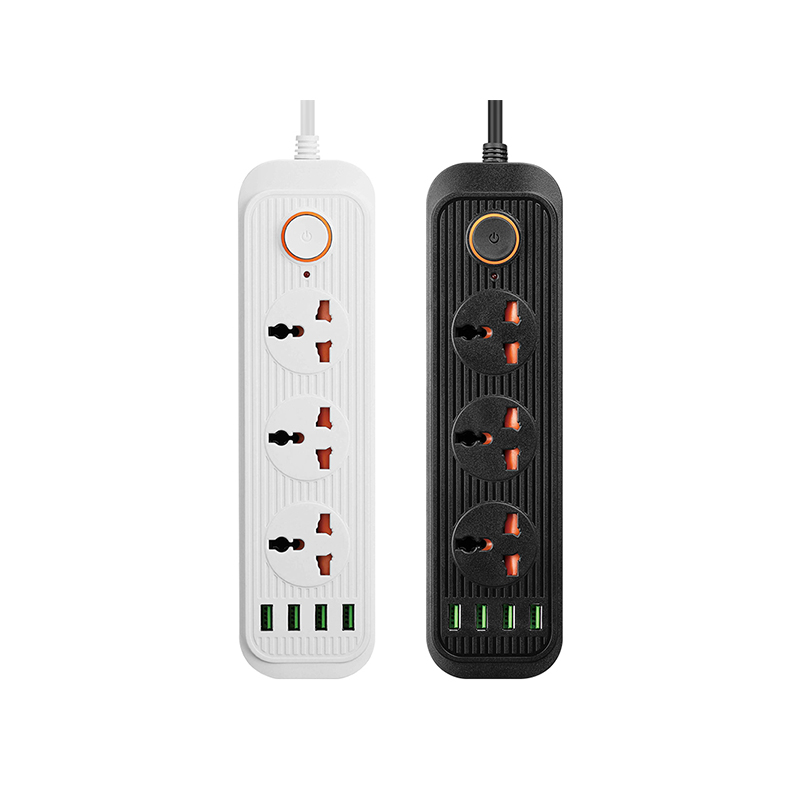
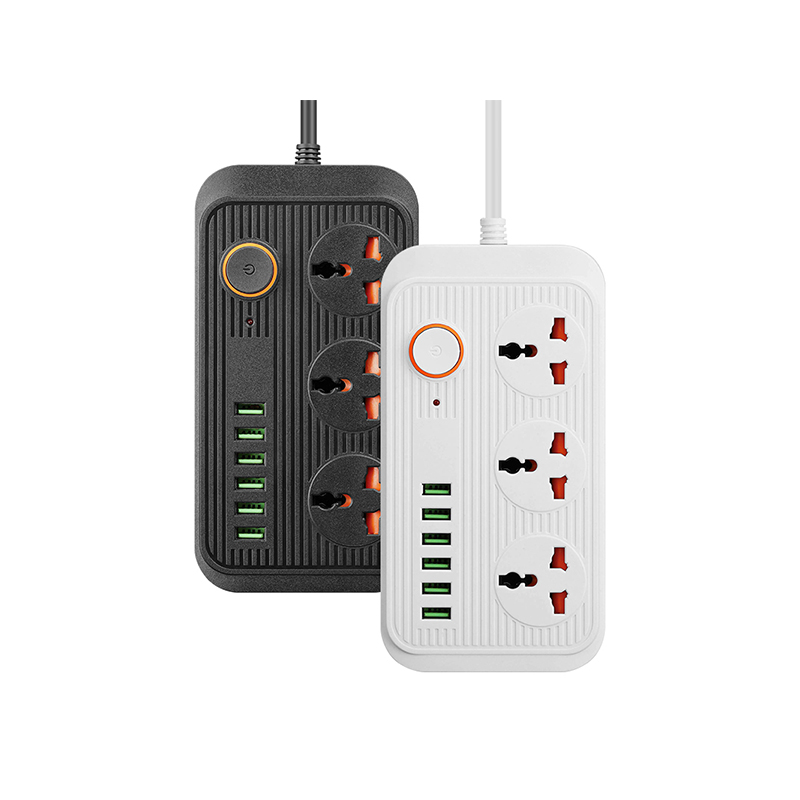
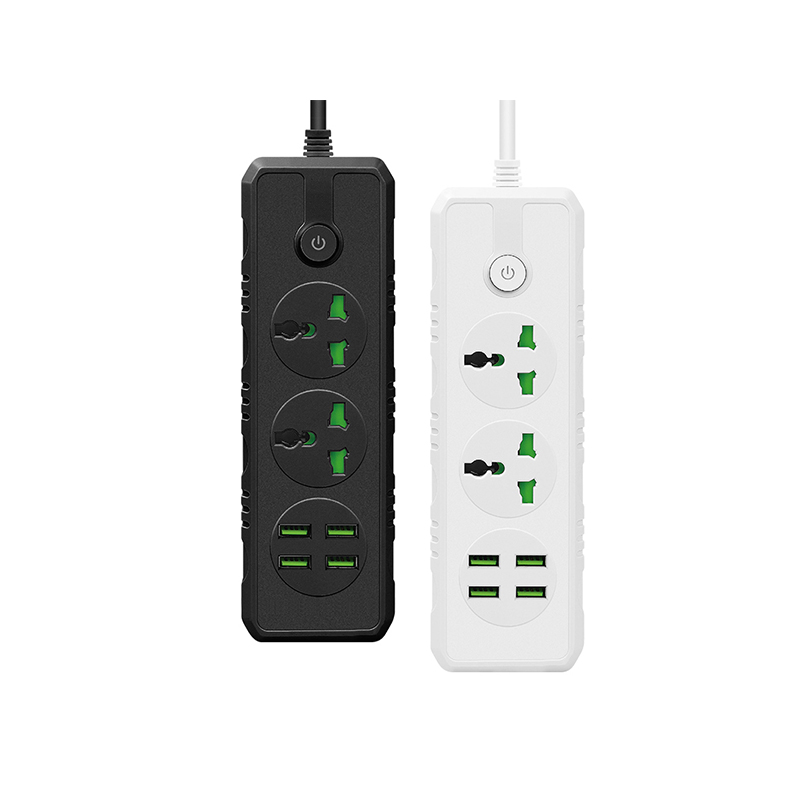
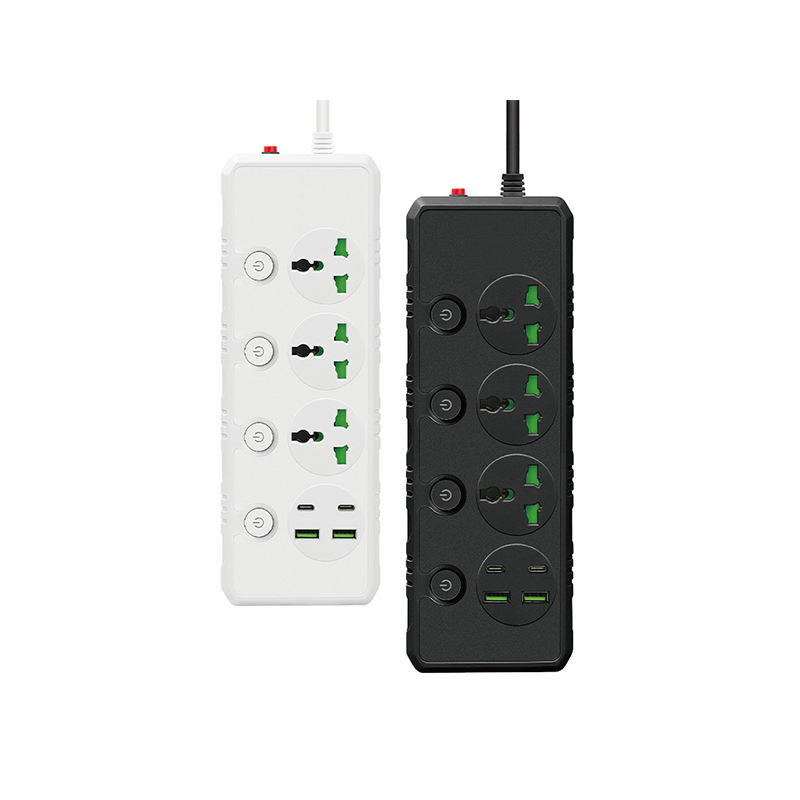
The physical protective layer is the foundation of the anti-electric shock design. Common protective cover designs fall into two categories: one is a sliding protective cover integrated into the power strip, installed inside. When the plug is not inserted, the socket automatically closes, only opening when both prongs of the plug are inserted simultaneously, preventing children from inserting metal objects alone; the other is an external protective cover, directly installed on the surface of the power strip, requiring a certain amount of force to open, suitable for power strips not currently in use at home or scenarios requiring additional protection. Some high-end power strips employ automatic socket-closing technology, with an internally installed synchronously opening safety baffle. The baffle is only pushed open synchronously when a standard plug is inserted; insertion from only one side cannot push it open, effectively preventing foreign objects from entering.
Anti-misoperation mechanisms increase the difficulty of operation, preventing children from arbitrarily activating the power strip. For example, toggle switch designs require users to rotate the switch to a specific position before inserting the plug, which requires a certain amount of force or precise finger dexterity, making it difficult for children to perform. Rotary anti-electric shock devices further enhance safety, requiring the plug to be fully screwed in before connecting to conductive parts, avoiding the risk of electric shock during insertion and removal. These designs not only prevent accidental contact by children but also extend the lifespan of electrical appliances and reduce wear and tear caused by prolonged power strip operation.
Smart protection technology provides dynamic protection for children's safety. Some power strips have built-in microprocessor-controlled differential current circuit breakers that monitor the balance of current inflow and outflow in real time. If a discrepancy is detected, the power is immediately cut off to prevent electric shock and fire. Smart power strips also feature remote control functionality, allowing parents to monitor the power strip's status and disconnect the power at any time via a mobile app, ensuring children's safety even when not at home. Some power strips also incorporate biometric technology, such as fingerprint or facial recognition, requiring only adults or authorized users to operate, fundamentally eliminating the possibility of accidental contact by children.
Material selection and structural design are equally crucial. The power strip's casing is made of high-strength insulating materials, such as polycarbonate (PC) or nylon 66 (PA66). These materials have excellent flame retardancy and heat resistance, effectively isolating current from the external environment. The internal conductive parts are encased in insulating material, ensuring that conductive components cannot be touched when plugging or unplugging. Some power strips feature a concealed live and neutral wire design, hiding the live and neutral wires within the structure, preventing fingers or sharp objects from touching them, further reducing the risk of electric shock.
Auxiliary safety designs reduce children's access opportunities through environmental optimization. For example, installing the power strip high on the wall, away from children's activity areas, prevents them from reaching the power strip by climbing or dragging chairs. A timer function allows parents to set the power strip's operating time, automatically cutting off power during peak children's activity periods to prevent unintentional power connection. Using barriers or protective covers around the power strip protects it and prevents children from approaching it.
Family safety education and equipment protection complement each other. Parents need to regularly teach children about safe electricity use, informing them of the dangers of electric shock and the correct way to use electrical appliances, such as not touching the power strip with wet hands and not inserting foreign objects. Through continuous education, children can gradually develop safe electricity habits, reducing the accident rate. Parents should also regularly check the wiring and appliances in their homes for leaks, promptly replacing aging or damaged parts to eliminate potential safety hazards.
The power strip's anti-electric shock design constructs a comprehensive protection system through multiple dimensions, including physical protection, smart technology, material optimization, and environmental management. These designs not only reflect technological care for children's safety but also remind parents to be fully involved in all aspects, from equipment selection and environmental setup to safety education, to jointly create a safe electrical environment for children.