


How does a universal socket cleverly prevent interference between plugs when multiple appliances are used simultaneously?
Release Time : 2026-01-06
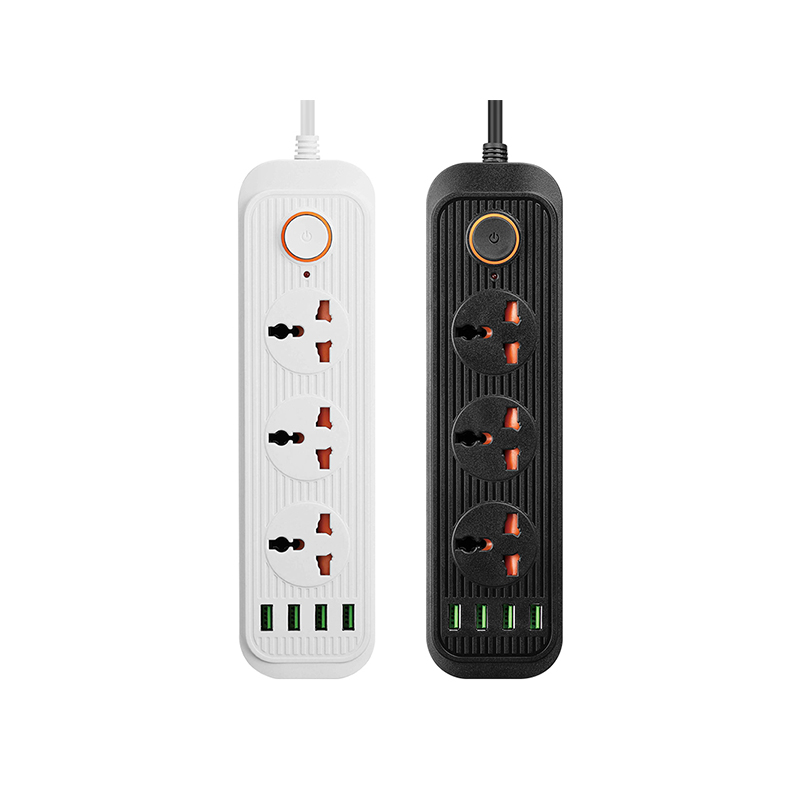
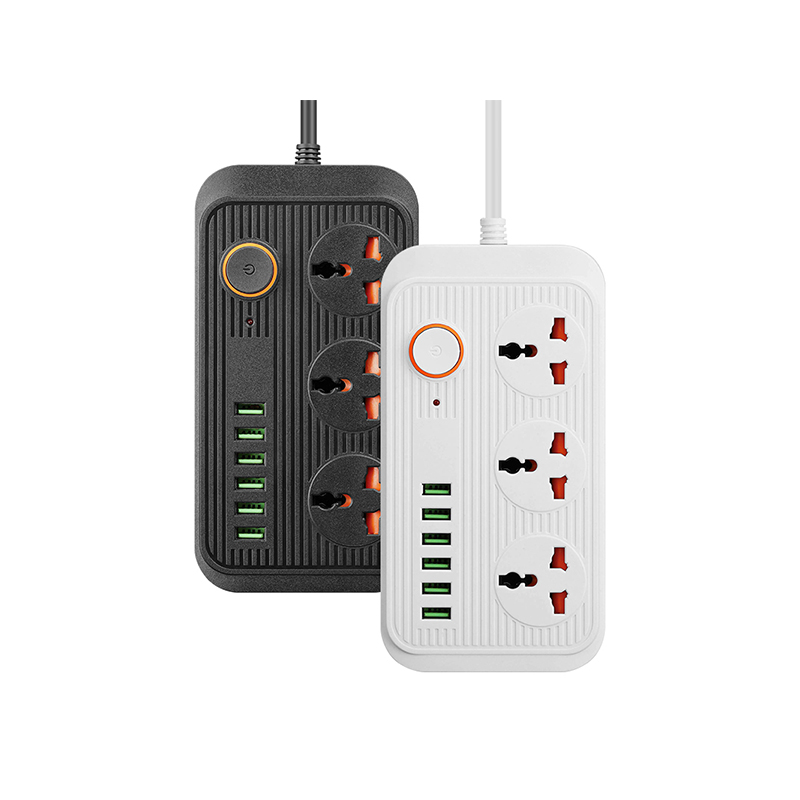
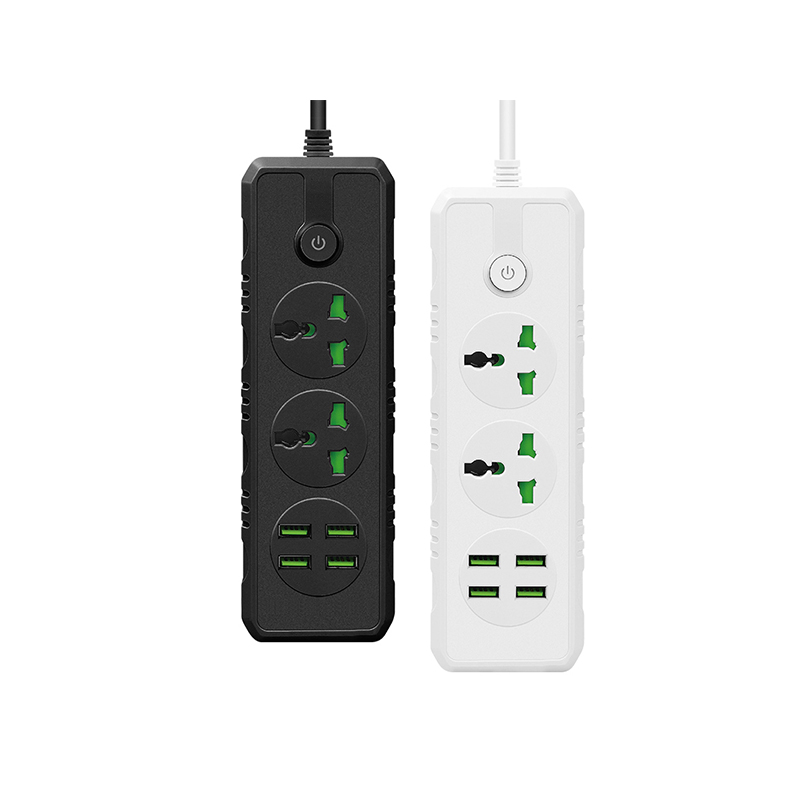
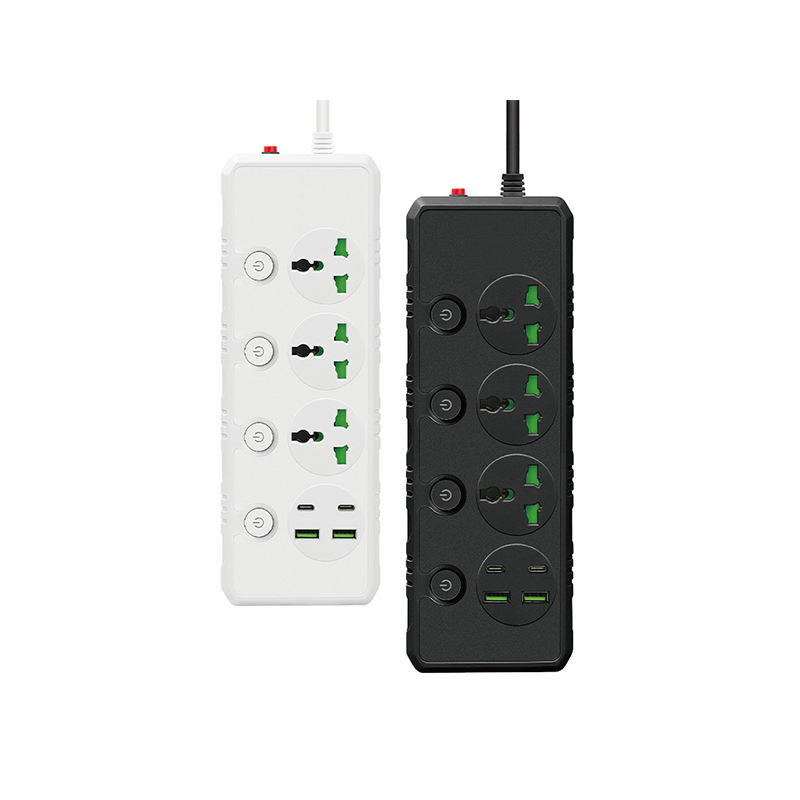
In modern homes and offices, power outlets are the "lifeline" for various electronic devices. With the surge in the number of electrical devices, a single outlet often needs to power multiple plugs simultaneously. However, plugs from different countries and of different models vary in shape—some are wide and flat, some are cylindrical and slender, some have grounding pins, and some are compact. If poorly designed, adjacent sockets can easily "clash" due to the large size of the plugs, rendering some sockets unusable and even posing safety hazards. A universal socket cleverly solves this problem, allowing multiple plugs to coexist without interference.
1. Staggered and Rotating Socket Layout
Traditional fixed sockets typically use parallel-arranged sockets. When a large power adapter is inserted, it often blocks the sockets on both sides, resulting in a wasteful "one plug in, two unusable" situation. A high-quality universal socket effectively alleviates this problem through an asymmetrical or staggered layout. For example, two sets of three-hole or two-hole sockets can be arranged at a certain angle and staggered, or distributed in a ring or radial pattern, to ensure that adjacent plugs physically avoid each other. Some high-end products even introduce rotatable socket modules, allowing users to manually adjust the socket orientation according to the plug size, maximizing panel space utilization and significantly improving the feasibility of using multiple devices simultaneously.
2. Flexible Spring and Independent Contact Design
The universal socket does not simply share the same set of metal plates for all sockets; instead, it employs an independent contact + high-elasticity phosphor bronze spring structure. Each socket is equipped with its own conductive spring, ensuring that even if different plug sizes are inserted into adjacent sockets simultaneously, the current path does not interfere with each other, and the contact resistance is stable. More importantly, these springs have excellent resilience and clamping force, tightly wrapping around plugs of different diameters, ensuring good conductivity while preventing loosening and arcing. This modular contact design avoids the risk of poor contact or overheating caused by plug crowding from both electrical and mechanical perspectives.
3. Optimized 3D Space and Integrated Socket Compatibility
To be compatible with mainstream global plug standards, universal sockets need to integrate multiple socket types on a limited panel. Designers save space through three-dimensional stacking and a shared grounding structure. For example, flat and round prongs share the same horizontal channel, automatically adapting to different prong shapes via internal guide bevels; the grounding hole is often placed in the center or on the edge, dedicated to larger plugs such as those conforming to British and Australian standards. Furthermore, some sockets use a recessed or stepped panel design, partially embedding large power adapters into the socket body, reducing outward protrusion and thus leaving more lateral space for adjacent sockets.
4. Safety Mechanisms Prevent Overload and Misinterpretation
While avoiding physical interference, universal sockets also incorporate multiple safety protections. Child safety shutters are standard: the safety shutters only open when both prongs are inserted simultaneously and sufficient pressure is applied, preventing accidental contact with a single prong. More importantly, high-quality universal sockets are equipped with overload protection switches and temperature fuses. When multiple high-power appliances are used simultaneously, causing the current to exceed the rated value, the protector will automatically cut off the power supply to prevent the circuit from overheating and causing a fire. This dual mechanism of "interference prevention + overload prevention" fundamentally ensures the safety of multiple devices sharing the same circuit.
The universal socket may seem simple, but it actually embodies the wisdom of industrial design, materials science, and electrical safety engineering. Through four strategies—staggered layout, independent contacts, space optimization, and intelligent protection—it not only solves the awkwardness of multiple plugs "clashing" but also achieves a delicate balance between compatibility and safety.
1. Staggered and Rotating Socket Layout
Traditional fixed sockets typically use parallel-arranged sockets. When a large power adapter is inserted, it often blocks the sockets on both sides, resulting in a wasteful "one plug in, two unusable" situation. A high-quality universal socket effectively alleviates this problem through an asymmetrical or staggered layout. For example, two sets of three-hole or two-hole sockets can be arranged at a certain angle and staggered, or distributed in a ring or radial pattern, to ensure that adjacent plugs physically avoid each other. Some high-end products even introduce rotatable socket modules, allowing users to manually adjust the socket orientation according to the plug size, maximizing panel space utilization and significantly improving the feasibility of using multiple devices simultaneously.
2. Flexible Spring and Independent Contact Design
The universal socket does not simply share the same set of metal plates for all sockets; instead, it employs an independent contact + high-elasticity phosphor bronze spring structure. Each socket is equipped with its own conductive spring, ensuring that even if different plug sizes are inserted into adjacent sockets simultaneously, the current path does not interfere with each other, and the contact resistance is stable. More importantly, these springs have excellent resilience and clamping force, tightly wrapping around plugs of different diameters, ensuring good conductivity while preventing loosening and arcing. This modular contact design avoids the risk of poor contact or overheating caused by plug crowding from both electrical and mechanical perspectives.
3. Optimized 3D Space and Integrated Socket Compatibility
To be compatible with mainstream global plug standards, universal sockets need to integrate multiple socket types on a limited panel. Designers save space through three-dimensional stacking and a shared grounding structure. For example, flat and round prongs share the same horizontal channel, automatically adapting to different prong shapes via internal guide bevels; the grounding hole is often placed in the center or on the edge, dedicated to larger plugs such as those conforming to British and Australian standards. Furthermore, some sockets use a recessed or stepped panel design, partially embedding large power adapters into the socket body, reducing outward protrusion and thus leaving more lateral space for adjacent sockets.
4. Safety Mechanisms Prevent Overload and Misinterpretation
While avoiding physical interference, universal sockets also incorporate multiple safety protections. Child safety shutters are standard: the safety shutters only open when both prongs are inserted simultaneously and sufficient pressure is applied, preventing accidental contact with a single prong. More importantly, high-quality universal sockets are equipped with overload protection switches and temperature fuses. When multiple high-power appliances are used simultaneously, causing the current to exceed the rated value, the protector will automatically cut off the power supply to prevent the circuit from overheating and causing a fire. This dual mechanism of "interference prevention + overload prevention" fundamentally ensures the safety of multiple devices sharing the same circuit.
The universal socket may seem simple, but it actually embodies the wisdom of industrial design, materials science, and electrical safety engineering. Through four strategies—staggered layout, independent contacts, space optimization, and intelligent protection—it not only solves the awkwardness of multiple plugs "clashing" but also achieves a delicate balance between compatibility and safety.