
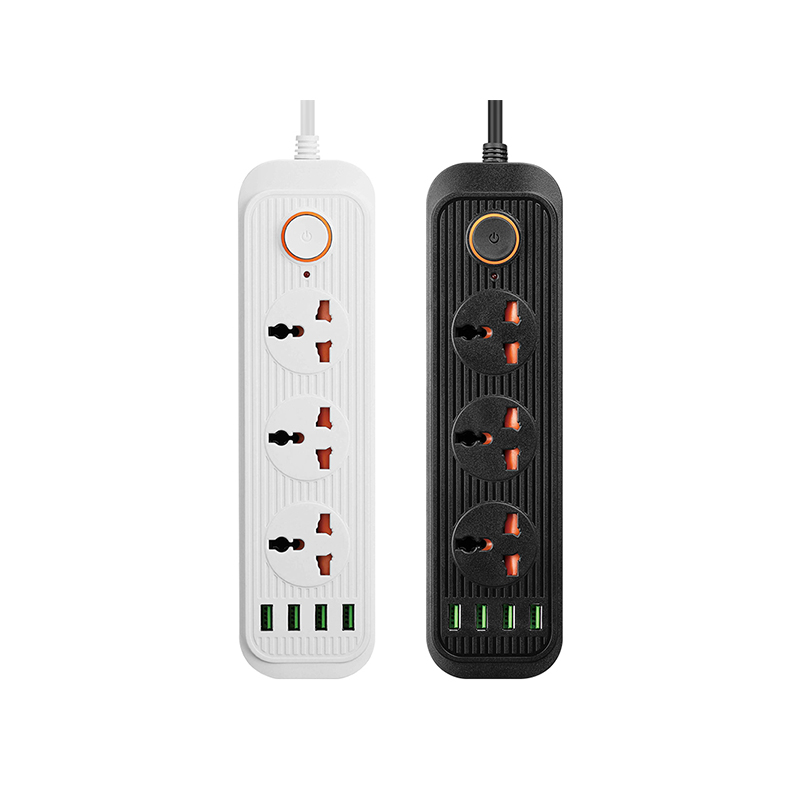
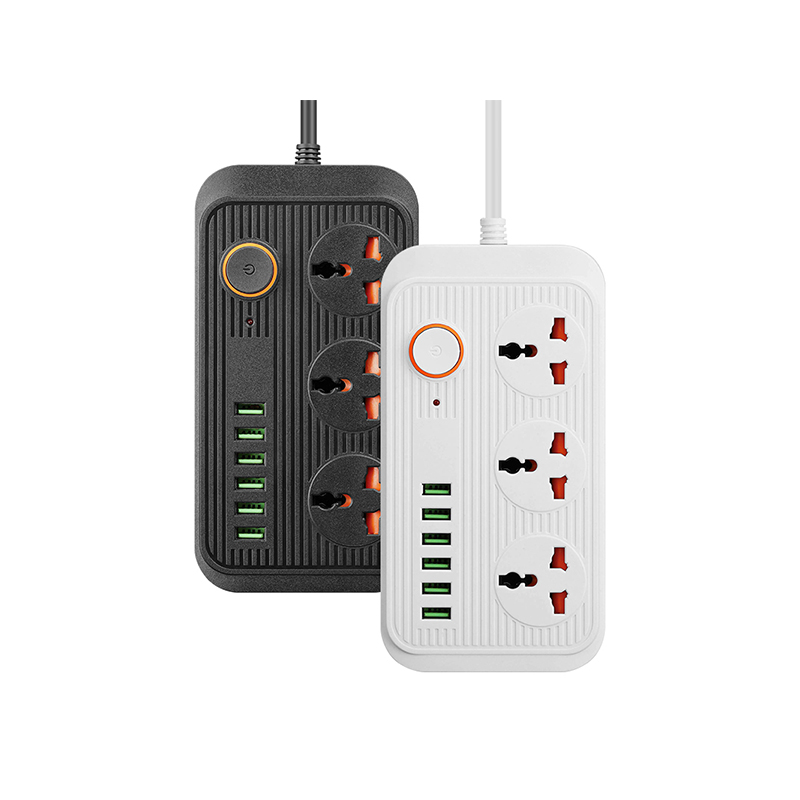
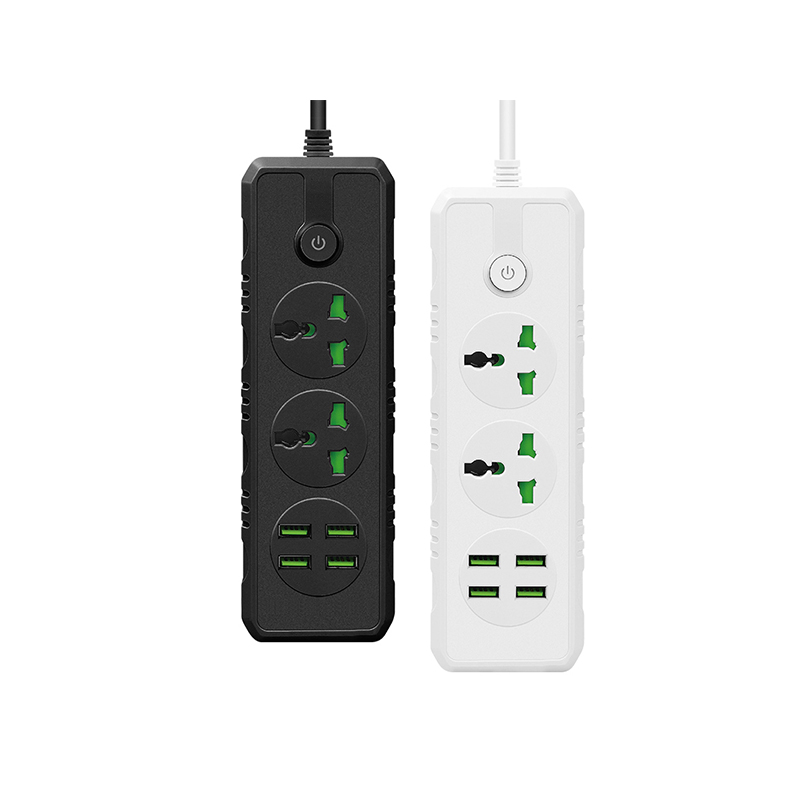
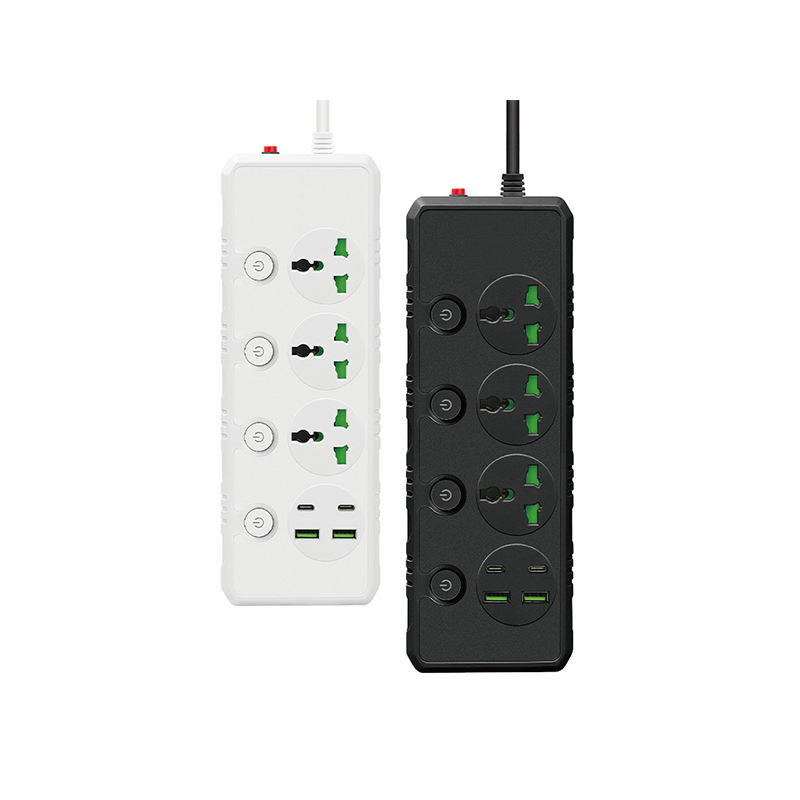


How does the power strip's socket spacing design prevent interference from multiple electrical appliances being used simultaneously?
Release Time : 2025-12-18
The socket spacing design of power strips requires structural optimization and functional innovation to achieve precise adaptation to plugs of different shapes. The core principle is balancing safety, versatility, and ease of use. While the fixed spacing design of traditional power strips meets basic requirements, it is prone to problems such as poor contact and space conflicts when dealing with irregularly shaped plugs or using multiple devices simultaneously. Modern power strips effectively improve the adaptability of socket spacing through innovative designs such as flexible contact structures, adjustable modules, and angled layouts.
The flexible contact structure is a key technology for solving plug size differences. The metal contact pieces inside the power strip are made of flexible materials, such as copper alloys or phosphor bronze, and are designed in an arc or wave shape. When the plug is inserted, the contact pieces automatically adjust their position according to the thickness of the plug leads, forming a tight, close contact surface. This design not only adapts to round leads of different diameters but also accommodates flat or irregularly shaped leads, reducing contact resistance and avoiding electrical sparks or overheating caused by looseness. For example, some high-end power strips feature gold or silver plating on their contact surfaces, further enhancing conductivity and corrosion resistance, ensuring long-term stability.
Adjustable socket modules provide dynamic adaptability for the power strip. Some power strips use mechanical structures for fine-tuning of the socket diameter, such as knob-type or slide-rail designs, allowing users to manually adjust the socket spacing according to plug size. Another common solution is a nested design, where the power strip contains multiple socket combinations of different sizes. The outer sockets are for standard plugs, while the inner ones accommodate thicker or thinner plugs. This design expands compatibility while maintaining the overall size of the power strip, making it particularly suitable for scenarios requiring frequent device changes. For example, in laboratory or industrial environments, the power strip may need to connect to instruments of different specifications simultaneously; adjustable modules significantly improve efficiency.
Angled layouts and staggered designs optimize the experience of using multiple devices simultaneously. Traditional power strip sockets are mostly arranged in a straight line, which can easily cause two large plugs to be squeezed together due to insufficient space. An angled layout, by altering the angle of the sockets, disperses the plugs after insertion, reducing interference. For example, some power strips design two- and three-prong sockets in an angled, staggered arrangement, accommodating simultaneous use of two- and three-prong plugs while preventing overlap. Furthermore, the staggered design increases the spacing between sockets, providing ample space for larger plugs or adapters with transformers, preventing safety hazards caused by poor contact.
Safety protection mechanisms are a crucial complement to socket spacing design. When adapting to different plugs, power strips must ensure electrical isolation and protection against electric shock. For example, some power strips feature insulating baffles around the sockets that only open when the plug is fully inserted, preventing accidental contact with live parts by fingers or foreign objects. Child-safe power strips further reduce the risk of electric shock through deeper sockets or spring-loaded doors. These protective measures, combined with socket spacing design, create a multi-layered safety system.
Scenario-based design makes power strips more suitable for practical needs. Different usage scenarios have varying requirements for socket spacing. For example, kitchen power strips need to accommodate large appliances like rice cookers and microwaves, so the socket spacing is typically larger, and they are equipped with splash-proof covers. Office power strips, on the other hand, need to support the simultaneous charging of multiple devices such as computers and mobile phones, resulting in smaller socket spacing but a greater number of sockets. Some power strips also have dedicated sockets designed for specific devices, such as power tool power strips and electric vehicle charging power strips, ensuring compatibility through customized spacing.
With the development of smart home and IoT technologies, the socket spacing design of power strips will evolve towards intelligence. For example, sensors will automatically identify plug types and adjust the spacing, or wireless charging modules will reduce reliance on physical sockets. These innovations will further enhance the adaptability and user experience of power strips, driving a dual upgrade in electrical safety and convenience.